
Standard Home Inspection
When you schedule a home inspection with Highview Home Inspections, you’re not just getting a checklist — you’re getting a detailed, professional evaluation of your home from roof to foundation. Our goal is to give you the knowledge and confidence you need to make informed decisions about your property.
Each inspection typically takes 3 to 5 hours, depending on the home’s size, age, and condition. We inspect all major systems, including the structure, roof, electrical, plumbing, HVAC, and interior components. Every inspection includes high-resolution photos, clear explanations, and practical recommendations.
We encourage clients to attend the inspection. Being present during the inspection provides you with an excellent orientation to your home. You get an eyes-on account of the condition of the property, its various systems, and tips for prolonging their service life. You can have your questions answered as they arise throughout the inspoction process, and gain a greater peace of mind in your investment.
Afterward, you’ll receive a digital report that’s easy to navigate and filled with helpful details — not just what needs attention, but why it matters. Whether you’re buying, selling, or maintaining your home, our mission is to ensure you have clarity, confidence, and peace of mind.
What Is Covered During the Home Inspection Process?
A Highview Home Inspection provides a comprehensive, visual, and unbiased evaluation of the property’s accessible systems and components. Each inspection follows the Illinois Standards of Practice and reflects our commitment to professionalism, accuracy, and integrity. Our goal is to identify conditions that may affect the safety, functionality, or longevity of your home and to provide you with clear, actionable information you can rely on.
Exterior & Structure
A detailed visual assessment of the home’s exterior components and structural integrity, including:
Foundation, crawlspace & structural supports: Checking for settlement, cracking, moisture intrusion, shifting, improper support, and structural deficiencies.
Exterior walls & siding: Evaluation of siding, brick, stucco, trim, caulking, flashing, paint condition, and overall weather protection.
Windows (Exterior Inspection): Condition of window frames, sills and trim, evidence of water intrusion , caulking and flashing integrity, and failed seals.
Doors (Exterior): Condition of frames, thresholds, seals, flashing, and operation where accessible.
Grading & drainage: Assessing slope, vegetation, drainage pathways, and downspout extensions to identify potential water-entry risks.
Decks, balconies & porches: Reviewing ledger attachment, footings, beams, joists, railings, guard height, stair construction, hardware, and overall stability and safety.
Driveways, patios & walkways: Checking for cracking, heaving, trip hazards, slope, and drainage concerns.
Retaining walls & exterior structures: Reviewing visible structural movement, drainage provisions, cracking, and general condition.
Roof System
A complete evaluation of roofing materials and accessible components, including:
Roof covering: Shingles, tiles, metal, flashing, valleys, and signs of leaks or improper installation.
Chimneys & vents: Examining masonry or metal chimneys, flues, flashing, and termination caps.
Skylights & penetrations: Checking seal integrity, flashing, and moisture staining.
Gutters & downspouts: Condition, slope, blockages, and secure attachment.
Attic roof structure (when accessible): Rafters, trusses, sheathing, ventilation, and insulation condition.
Electrical System
A safety-centered inspection of the home’s electrical components, including:
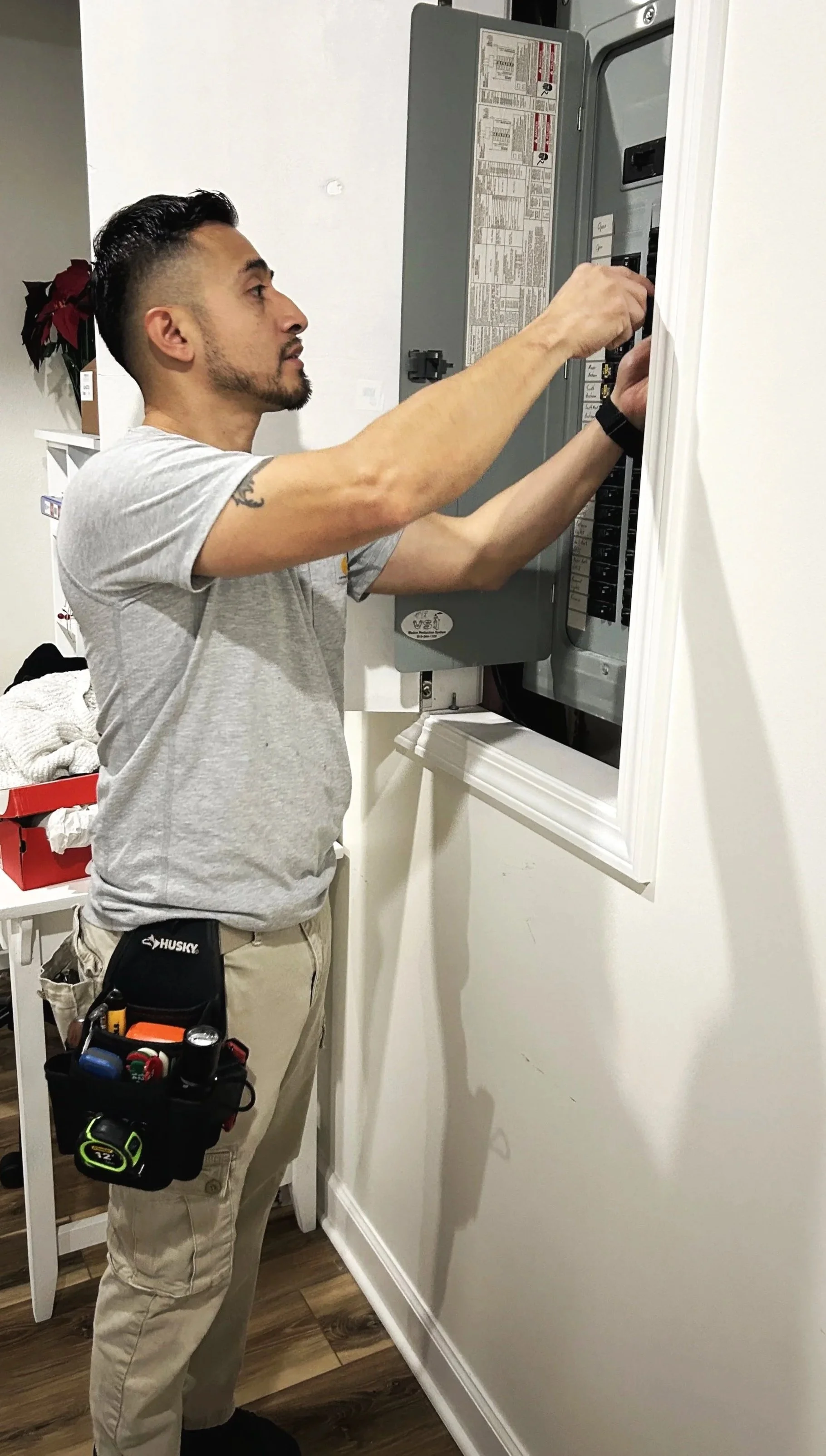
Main service panel: Condition of breakers, fuses, wiring, grounding, bonding, conductor sizing, double-tapping, overheating, and labeling.
Subpanels: Installation quality, bonding/grounding requirements, wiring condition, and panel accessibility.
Branch circuits: Accessible outlets, switches, junction boxes, and lighting fixtures.
GFCI & AFCI protection: Testing and verifying protection in required areas (kitchen, bathrooms, exterior, garage, bedrooms).
Smoke & CO detectors: Presence, placement, and functionality (where accessible).
Exterior & garage electrical: Outlets, fixtures, conduit, bonding, and protection.
Plumbing System
A thorough evaluation of accessible plumbing components, including:
Water supply system: Visible piping, shut-off valves, water pressure, leaks, and material type.
Drain, waste & vent system: Condition of traps, drain lines, venting, slow drainage, and signs of backups.
Water heater: Age, installation, safety valves, expansion tank, venting, combustion air, electrical supply, seismic strapping (if required), and proper function.
Fixtures & faucets: Testing sinks, tubs, toilets, showers, and exterior spigots for leaks and proper operation.
Sump pumps & sewage systems: Checking pump operation, drainage, discharge location, and visible plumbing
HVAC System (Heating & Cooling)
Inspection of heating and cooling systems for safety and performance. A combustion analyzer is used on every furnace to measure carbon monoxide levels, oxygen, draft, and overall combustion efficiency.
Furnace: Burners, blower, ignition system, filters, ductwork, exhaust venting, and general operation
Boiler: Boiler body condition, burner assembly, ignition, piping, radiators/baseboards, circulation pumps, safety valves, draft, and overall heating performance
Air Conditioner: Condenser, evaporator coil (if accessible), refrigerant lines, electrical disconnects, condensate drainage, and temperature output
Thermostats: Operation, settings, and response
Distribution Systems: Duct condition, airflow, registers, and insulation
Interior Components
Inspection of interior features and finishes, including:
Walls, ceilings & floors: Cracking, moisture staining, settlement, and damage.
Doors & windows: Functionality, locks, framing, and weatherstripping.
Stairs & railings: Safety, guard and handrail requirements, and stability.
Cabinetry & countertops: Installation quality and condition.
Garage interiors: Fire separation, automatic door safety systems, outlets, and ventilation.
Attic, Insulation & Ventilation
A detailed evaluation of attic conditions, including:
Insulation: Type, coverage, effectiveness, and energy efficiency.
Ventilation: Soffit vents, ridge vents, attic fans, baffles, and airflow.
Moisture & condensation: Checking for staining, mold-like substances, and poor airflow.
Structural elements: Rafters, joists, and sheathing.
Thermal Imaging (Infrared):
Used on every inspection to detect temperature differences that may indicate moisture intrusion, missing insulation, electrical hot spots, HVAC performance issues, and other hidden defects.
Optional Add-On Services
Highview Home Inspections also offers specialized services to provide a more complete property evaluation:
Sewer Scope Inspection
Termite / WDO Inspection (NPMA-33 Certified)
Chimney Scan Inspection
Mold Air Sampling
Irrigation Systems